


'The Cure' Review: A Thrilling Ride Where a Seemingly Loving Family turns into a Chilling Experiment
By Romey Norton - April 14, 2026
The Cure taps into the reality that the people meant to protect you might be the ones you should fear most with a premise that is as intimate as it is unsettling: a teenage girl discovers that her own parents may be exploiting her body for something far darker than medicine.
At the centre of the film is Ally Braun, a 16-year-old navigating life with a mysterious, chronic illness. From the outset, The Cure frames her condition as part of her identity; something that shapes how others see her and how she understands herself. It’s a smart entry point, grounding the film in a recognisable emotional reality before it begins to unravel that foundation piece by piece.
Ally’s adoptive parents, biotech billionaires with access to cutting-edge science, initially appear as the archetypal saviours: wealthy, resourceful, and determined to find answers where others have failed. But as Ally begins to question inconsistencies in her treatment and the secrecy surrounding her condition, the film pivots into darker territory. What starts as concern gradually curdles into suspicion, and then into outright dread.
Thematically, The Cure sits at the intersection of science fiction and psychological thriller. It raises questions about ethics, ownership, and the commodification of the human body, particularly when that body belongs to someone young and vulnerable. The idea of “harvesting” is treated as a logical extension of a world where innovation often outpaces morality. Perhaps the most unsettling aspect of The Cure is how plausible it feels. In an age of rapid biotech advancement and increasing conversations around medical ethics, the film’s premise doesn’t feel entirely far-fetched. It will make audiences think about who controls our bodies, our data, and our futures, and what happens when that control is taken without consent.

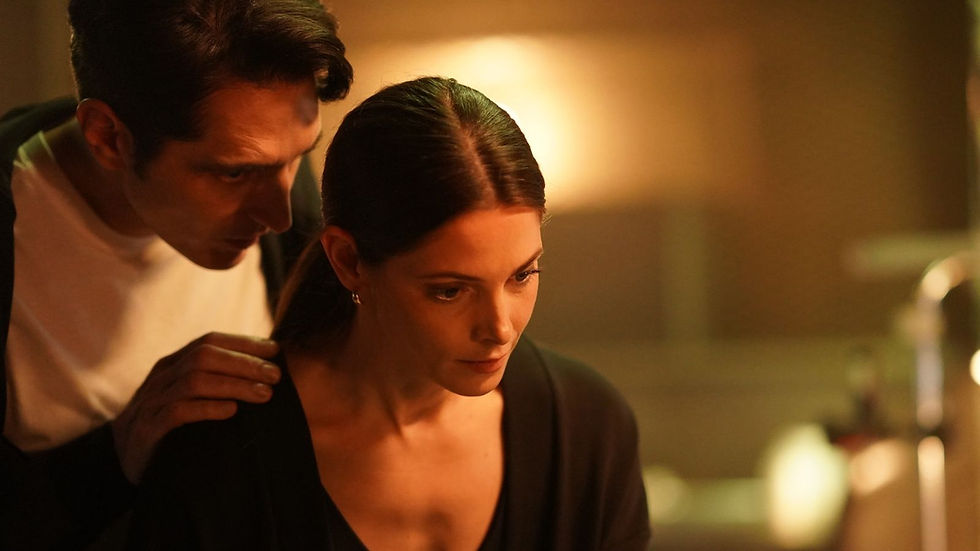
Performance-wise, the film rests heavily on its young lead, Samantha Cochran, who carries the emotional weight of the story with impressive nuance. Ally’s journey from confusion to suspicion to defiance is handled with a subtlety that keeps the character grounded, even as the plot edges toward more extreme territory. David Dastmalchian and Ashley Greene playing her parents, who walk a careful line, balancing warmth and menace in a way that keeps their true intentions just out of reach for much of the runtime.
There's a freaky old woman who attacks Ally and if it weren't for the film Weapons I'd have been more scared.

The film does rely on familiar genre beats. The “secretive wealthy family” and “hidden medical agenda” are well-trodden tropes, and The Cure doesn’t always subvert them as much as it could. There are moments where the narrative feels slightly predictable, particularly as it moves toward its climax.
The Cure leaves behind more questions than answers - feeling under explored and safe. Viewers will either love or hate this film. Ultimately, it tries to leave you in discomfort. Because sometimes, the most terrifying discovery isn’t what’s wrong with you, it’s why.
'The Cure' is available now on digital platforms.

Want more film reviews? Dive into more reviews, rankings, and film conversations on our site. Explore Film Focus Online now!


