


'Tony' Review: A Charming, Sweet and Funny Look at an Early Anthony Bourdain That Avoids Biopic Clichés
By Dan Bremner - August 5, 2026
The new film from Matt Johnson, whose Blackberry was one of the more genuinely surprising and accomplished films I've seen in recent years and whose other work I keep meaning to get to and somehow haven't. I'll be honest and admit I had no meaningful awareness of Anthony Bourdain himself until the trailers for this started appearing, which probably puts me in a minority but also meant I arrived with no particular expectations about faithfulness to the source material or anxieties about whether the performance captured the real man.
Simply, this is a film about a nineteen-year-old discovering a passion in a chaotic kitchen in 1975, which turns out to be an entirely sufficient amount of context for what Tony wants to be and very nearly entirely achieves. The usual biopic leaves me cold, the cradle-to-grave montage of significant moments and significant relationships that checks off the beats of a famous life without ever making you feel you've actually been in the presence of a real person. Tony does the opposite, taking a single formative summer and exploring it with such focus and such warmth that by the end you feel you understand something genuine about why this person became who they eventually became, even without the film ever telling you directly.
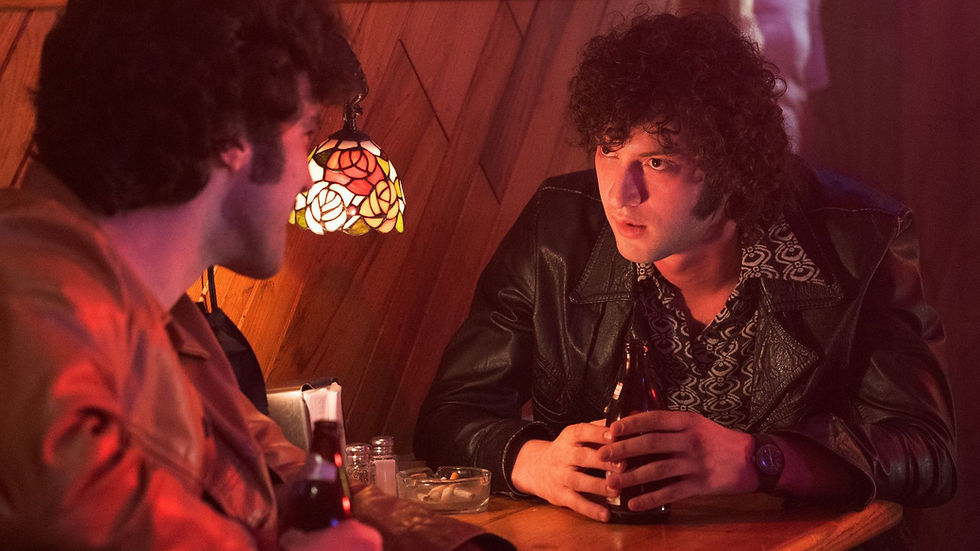
Dominic Sessa is the film and the film is Dominic Sessa, a star-making performance in the truest sense of the phrase. He was excellent in The Holdovers and this is a significant step beyond that, finding the genuinely difficult balance the young Bourdain requires between brash confidence and naked insecurity, between genuine charm and considerable arrogance, between someone who knows they have something and someone who has absolutely no idea what to do with it yet. The performance never telegraphs the famous man this boy will become, which is exactly the right choice and the one that gives the film its freshness. You're watching a lost nineteen-year-old with a chip on his shoulder and a facility with words stumble into a world that makes sense to him for the first time, not watching an actor perform the origin story of a celebrity. Sessa makes Tony feel like a real person rather than a historical figure being dramatised, which is the thing biopics almost never achieve and the thing this film does almost effortlessly.

The kitchen itself is rendered with the controlled chaos of something that has been observed and recreated rather than simply imagined, the heat and the noise and the social ecosystem of an amateur kitchen in this era coming across as genuinely authentic. Johnson brings his characteristic interest in institutions and how they shape the people inside them, the dynamic between the different levels of kitchen hierarchy providing natural drama and natural comedy in roughly equal measure. While there are some kitchen-based blowouts and incidents, it was so refreshing to see a film set in this world that isn't all about the stress and anxiety of running a kitchen. Boiling Point and The Bear are both fantastic, but it's to see such a fresh angle.
Leo Woodall, fresh off his excellent work in Tuner, is quietly very good in a supporting role that gives him enough to do with an often hostile, violent and unpredictable role without pulling focus from Sessa's central performance. Antonio Banderas arrives with a warmth and an authority that immediately explains why the young Tony would find himself both intimidated and magnetised, and the dynamic between them provides the film's emotional backbone with a subtlety and a generosity on both sides that makes their scenes together the richest in the film. Emilia Jones in a smaller role brings a strong charm and likeability that you can almost see why Bourdain uprooted his life for a shot.

Matt Johnson's direction maintains the energy and the period texture throughout with an unobtrusiveness that serves the material, never pulling attention to itself when it should be on Sessa and the world he's navigating. The 1975 setting is handled with enough detail and enough confidence to feel genuinely inhabited rather than costumed, and the film avoids the nostalgia trap of making the period feel aspirational or rosy rather than simply the time and place these things happened. The coming-of-age framework is familiar but the execution is fresh enough that the familiar beats arrive with genuine feeling rather than mechanical inevitability.
The film's most admirable quality is what it refuses to do. It doesn't heavy-handedly foreshadow the famous Bourdain who will eventually emerge from this summer. It doesn't manufacture a single defining moment of revelation or transformation. It simply follows a young man through a period that clearly mattered enormously to him, with enough intelligence and enough trust in the audience to let the significance speak for itself. That restraint is considerably harder to achieve than its effortlessness suggests. There might be some Glup Shitto moments for true Bourdain-heads, but thankfully this lacks “say that again” moments.
Tony manages to be a really nice and insightful look at a brief period in Anthony Bourdain's life, failing to fall into biopic tropes and clichés, instead feeling like a character-focused hangout film. Matt Johnson keeps things light, natural and very funny amongst the drama, while Dominic Sessa continues his streak of excellent understated work with great support from Antonio Banderas, Leo Woodall and Emilia Jones.
'Tony' releases in cinemas August 14, 2026.

Want more film reviews? Dive into more reviews, rankings, and film conversations on our site. Explore Film Focus Online now!


